
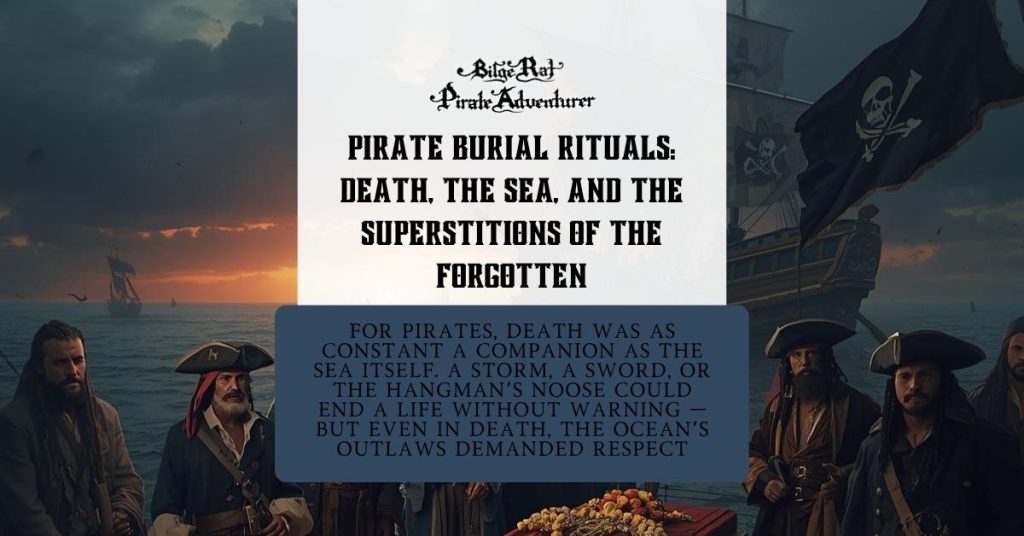
For pirates, death was as constant a companion as the sea itself. A storm, a sword, or the hangman’s noose could end a life without warning — but even in death, the ocean’s outlaws demanded respect.
Pirate burial rituals were steeped in superstition, practicality, and a haunting reverence for the sea. Some were laid to rest on lonely shores, others slipped quietly beneath the waves, and a few met fiery ends meant to ward off curses.
In this post, we’ll explore how real pirates faced death, how they honored their dead, and why these rituals still echo through maritime folklore today.
The Sea as a Grave: Burials at Sea
For most pirates, the sea itself was both home and tomb. When death struck aboard a ship, time and space were scarce, and burial at sea was the only option.
Bodies were sewn into sailcloth — often with the final stitch through the nose to ensure they were truly dead — and weighted with cannonballs or ballast before being slid overboard. The ceremony was brief but solemn. A few words, sometimes from Scripture or a ship’s own “code,” were spoken before the body vanished into the deep.
Superstition played its part:
A calm sea during burial meant the soul was accepted by the ocean.
Rough waters meant the spirit might wander — a ghost at sea.
Some captains insisted the body face east, toward the rising sun, symbolizing rebirth.
📖 In the Bilge Rat Pirate Adventurer Series, such rites are reimagined with vivid realism — capturing both the grit and poetry of life (and death) at sea.
Learn More:
⚰️ The Secret Graves of Shore-Bound Pirates
While the sea claimed many, some pirates sought more earthly resting places. When a crew made landfall, fallen comrades might be buried in secret — often in unmarked graves to prevent discovery by authorities or grave robbers.
Many were interred with tokens: a dagger, a coin, or even a piece of their ship’s rigging to guide them to the next world. In Caribbean folklore, burying a pirate with treasure was thought to trap their spirit — creating the infamous tales of ghosts guarding gold.
Historical examples:
The pirate Edward Teach (Blackbeard) was decapitated, his head hung from the bowsprit of HMS Pearl. But local tales say his body swam around the ship three times before sinking.
Captain Kidd’s rumored buried treasure along the American coast inspired centuries of ghost stories.
👉 Takeaway: Pirate burials weren’t just about honoring the dead — they were acts of fear, guilt, and protection, ensuring the spirits of the fallen didn’t return for revenge.
Learn More:
Want to be the first to read Kevin C Smith's blog posts about the real hisotry of the pirates of our past? Sign up for the newsletter join us as we set sail exploring high seas - one pirate adventure at a time!
Fire, Ash, and the Superstitions of Cleansing
In rare cases, pirates turned to fire for purification. When disease or suspected curses swept through a crew, bodies were burned to prevent spiritual or physical contagion.
Flames symbolized release — a cleansing of the soul before it could haunt the ship. Some captains even burned personal belongings of the dead, believing it would prevent their spirits from lingering.
Stories of ghost ships and cursed fleets often trace their origins to such fiery rites gone wrong. When wood, tar, and sailcloth burned together, the smell haunted sailors long after the smoke cleared.
In folklore and fiction:
These fiery rituals became metaphors for redemption — burning away sin before the soul could sail on. Modern pirate fiction (including Pirates of the Caribbean and The Bilge Rat Pirate Adventurer Series) often draws on these symbols to portray freedom through fire.
⚓ Rituals of Memory: The Crew’s Farewell
After a burial, pirates often held a brief ceremony known as a “dead man’s toast.” The crew would gather, raise a mug of rum, and share tales of the fallen — a blend of mourning and celebration.
A few ships even fired a single cannon into the sea as a salute. Others carved a mark into the ship’s mast or hull to memorialize the departed.
Superstitions dictated that no voyage resume until the crew’s morale had been restored — laughter, music, and storytelling were essential. Grief was dangerous at sea; it could anger the ocean itself.
This practice of toasting the dead continues today in navies and sailing traditions worldwide — a direct inheritance from pirate lore.

✨ Step into the world where legend meets history with the Bilge Rat Pirate Adventure Series
— a swashbuckling saga that blends the raw grit of historical detail with the timeless allure of folklore. From cursed islands and whispered superstitions to battles fought under blood-red skies, the series captures the thrill of life on the edge of the map while weaving in echoes of the myths that shaped seafaring culture. Perfect for readers who love historical fiction, nautical adventure, and the folklore of the sea, these tales invite you to escape into lawless frontiers and decide for yourself where history ends and legend begins.
Death, Superstition, and the Afterlife at Sea
For pirates, death wasn’t the end — it was a transformation. Many believed the ocean claimed their souls, either to rest peacefully in Davy Jones’ Locker or to wander eternally with the Flying Dutchman.
Superstition shaped every part of life on the waves — and death was no exception. Even modern sailors echo fragments of these beliefs: avoiding renaming ships, keeping rituals before voyages, or tipping hats to the sea.
The line between history and legend blurs easily in these traditions, but that’s what makes them enduring. Pirate burials remind us that even in lawlessness, there was reverence — a code between man and the sea.
📚 Read More in the Pirate Superstitions Blog Series:
⚓ Conclusion
Burial rituals were more than grim necessities — they were expressions of respect, fear, and belief. They reveal that pirates, though infamous for rebellion and greed, still bowed to something greater than themselves: the power of the sea.
Every ship that sailed under black sails carried its own ghosts, its own codes, and its own way of saying farewell.
🌊 Set sail through history and legend with the Bilge Rat Pirate Adventurer Series — where truth, myth, and the human spirit collide on the high seas.