
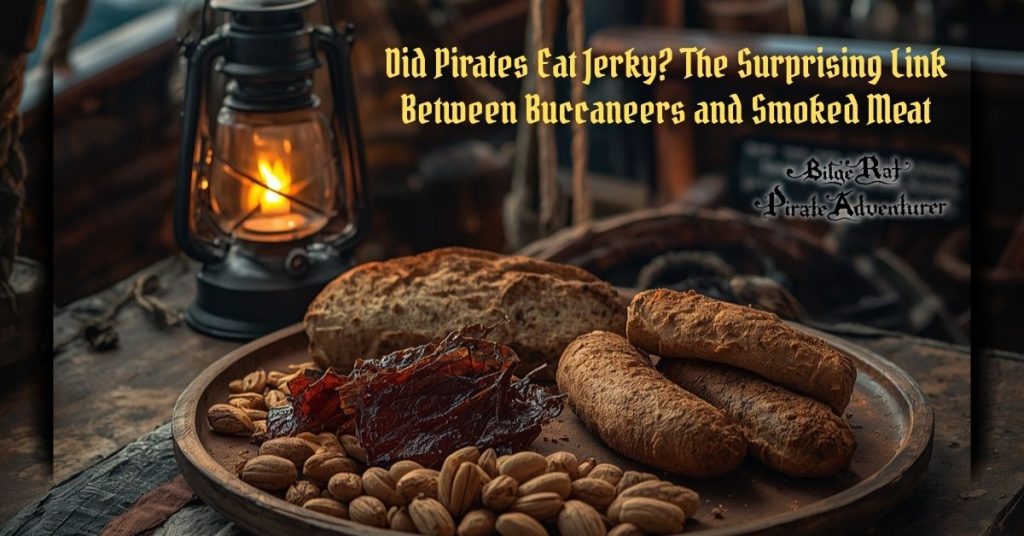
Did Pirates Eat Jerky? The Surprising Link Between Buccaneers and Smoked Meat
Captain's Log — Pirate Food, Survival, and the Origins of the Buccaneers
When most people think of pirate food, they imagine barrels of rum, hardtack biscuits, and maybe the occasional fish caught over the side of the ship.
But what if one of the most important foods in pirate history was something surprisingly familiar?
Jerky.
Not necessarily the peppered beef jerky you find in a convenience store today, but dried and smoked meat that served the same purpose: portable protein that could survive long journeys without spoiling.
In fact, one of the most famous words in pirate history—buccaneer—owes its existence to a method of preserving meat.
The story begins not aboard a pirate ship, but around a smoking rack.
The Problem Every Sailor Faced
Before refrigeration, food was one of the greatest challenges of any ocean voyage.
A pirate crew might spend weeks or months at sea. Fresh meat spoiled quickly. Fruits and vegetables disappeared fast. Every meal had to be planned around what could survive heat, humidity, salt air, and time.
Most ships carried provisions such as:
- Hardtack biscuits
- Salted pork
- Salted beef
- Dried peas and beans
- Cheese
- Grain products
- Dried fish
These foods were durable, but they weren’t always enjoyable.
Hardtack could become infested with insects.
Salted meat could become tough and unpleasant.
Fresh food was always prized because it broke the monotony and helped prevent illness.
This made preserved meats incredibly valuable.
What Was Jerky Like in the Age of Pirates?
The concept was simple:
Remove moisture from meat and it lasts much longer.
People around the world have preserved meat through drying and smoking for thousands of years. During the Golden Age of Piracy, sailors encountered many regional versions of this practice.
Preserved meats might include:
- Dried beef
- Smoked pork
- Dried fish
- Salt-cured meat
- Smoked game animals
The result wasn’t identical to modern jerky, but it served a similar purpose.
It was:
- Portable
- Long-lasting
- High in protein
- Useful during long voyages
For people who lived much of their lives at sea, that combination was extremely important.

✨ Step into the world where legend meets history with the Bilge Rat Pirate Adventure Series
— a swashbuckling saga that blends the raw grit of historical detail with the timeless allure of folklore. From cursed islands and whispered superstitions to battles fought under blood-red skies, the series captures the thrill of life on the edge of the map while weaving in echoes of the myths that shaped seafaring culture. Perfect for readers who love historical fiction, nautical adventure, and the folklore of the sea, these tales invite you to escape into lawless frontiers and decide for yourself where history ends and legend begins.
The Origin of the Buccaneers
Here’s where pirate history gets interesting.
Long before the famous pirate captains of the Caribbean, hunters on the island of Hispaniola developed a thriving trade in smoked meat.
These hunters learned preservation techniques used by Indigenous peoples of the Caribbean. Meat was placed on raised wooden frames over slow fires.
These wooden smoking racks were called boucans.
The men who prepared the meat became known as boucaniers.
The French word eventually evolved into the English word:
Buccaneer.
Yes—the same word we associate with pirates originally referred to people who smoked and dried meat.
Many of these hunters sold provisions to passing ships, supplying sailors with food that could survive long voyages.
Over time, some boucaniers became involved in raiding Spanish shipping, privateering, and piracy.
The name stayed.
The profession changed.
And one of history’s most famous pirate terms was born.
Why Smoked Meat Was So Valuable
For pirates, food wasn’t just about comfort.
It was about survival.
A crew that couldn’t eat couldn’t fight.
A crew weakened by hunger became vulnerable to disease, poor morale, and mutiny.
Smoked and dried meat offered several advantages:
Long Shelf Life
When properly prepared, preserved meat could last significantly longer than fresh cuts.
Portability
It could be stored aboard ship and transported easily.
Nutrition
Protein was difficult to replace during long voyages.
Trade Value
Food itself could become a form of currency in remote regions.
Pirates often targeted ships carrying supplies because practical goods could be just as valuable as treasure.
Sometimes more valuable.
After all, you can’t eat gold.
Pirates Were Opportunistic Eaters
Despite popular stereotypes, pirates rarely had the luxury of being picky.
They ate what was available.
Depending on location and circumstance, pirate crews might consume:
- Salted beef
- Salted pork
- Smoked meat
- Dried fish
- Sea turtles
- Fresh fish
- Beans
- Peas
- Rice
- Tropical fruit
- Captured provisions from merchant ships
A lucky crew might enjoy fresh food after reaching an island.
An unlucky crew might spend weeks surviving on hardtack and preserved meat.
Life at sea was unpredictable, and so was the menu.
The Connection Between Food and Pirate Health
Preserved meat solved some problems, but not all.
One of the greatest threats to sailors was scurvy, caused by a lack of vitamin C.
While smoked meat provided protein and calories, it couldn’t replace fresh fruits and vegetables.
This meant pirates constantly searched for opportunities to acquire:
- Citrus fruits
- Fresh produce
- Local plants
- Fresh meat and fish
Many pirate havens became important not just because they offered shelter, but because they provided access to fresh food and water.
The healthiest crews were often the crews that could replenish their supplies regularly.
A Taste of Pirate Reality
Popular culture often portrays pirates as treasure hunters first and sailors second.
The reality was usually reversed.
Most pirate captains spent enormous amounts of time thinking about:
- Food
- Water
- Repairs
- Weather
- Navigation
- Crew health
Without these necessities, no amount of treasure mattered.
The daily challenge of feeding a crew shaped nearly every voyage.
And that makes the story of the buccaneers even more fascinating.
One of the most famous names in pirate history began with people whose greatest skill wasn’t sword fighting.
It was preserving meat.
Want to be the first to read Kevin C Smith's blog posts about the real hisotry of the pirates of our past? Sign up for the newsletter join us as we set sail exploring high seas - one pirate adventure at a time!
The Bilge Rat Perspective
The Bilge Rat Pirate Adventurer Series embraces the reality of life at sea.
Pirates don’t survive on legend alone. They survive on supplies, planning, and resourcefulness.
Food matters.
Weather matters.
Water matters.
The small details of daily life often determine who thrives and who struggles.
That’s part of what makes pirate history so compelling. Behind every dramatic sea battle was a crew that still needed breakfast.
Conclusion: The Pirate Snack You Didn’t Expect
So did pirates eat jerky?
Not exactly in the modern sense.
But they absolutely relied on dried, smoked, and preserved meats that served the same purpose.
And remarkably, one of the most iconic pirate words in history—buccaneer—can trace its roots back to a wooden rack used to smoke meat.
It’s a reminder that pirate history is often stranger, more practical, and more interesting than fiction.
The next time you open a bag of jerky, remember:
You’re holding something surprisingly close to a food that helped shape the world of pirates.
And that may be the tastiest pirate fact of all.